
01
Autotune
Per-board tuning runs after install and settles on its own. Expect a restart while it works.
GHOST INC.
GHOSTSHELL
Firmware for Z-series Zcash miners · 6 models ready · Z15 Pro & Z15k beta
Ghost Shell is firmware for Z-series Equihash Zcash miners — Z9 Mini through Z15 Pro: a Linux-based image with the Ghost Shell dashboard, per-chip autotune and hash-board control.
2.5% developer fee · no license price · no subscription
Schematic is illustrative. Figures are preliminary per-model bench results, pending a 72-hour firmware soak; per-model gains: Z15 +14.5%, Z15j +29.4%, Z9 Mini +59.6%. Profitability disclaimer · Hardware & PSU risk
GHOSTSHELL ON Z-SERIES — EFFICIENT POWER PATH
Supported hardware
Ghost Shell supports six Z-series Zcash miners today (Z15, Z15j, Z15e, Z11, Z9, Z9 Mini); the Z15 Pro and Z15k are in beta — join the waitlist. You don't pick a per-model download: images are built per control board (C55 and C52 for the Z15 series, C43 for the Z11 and Z9 series), and on boot Ghost Shell detects which miner it is running in.
Loading supported hardware…
Models marked Ready are supported now; Beta models are waitlist-only. Need to go back to factory firmware? See Restore stock firmware in the install section. Benchmark gains are lab measurements, not guaranteed financial returns (Profitability Disclaimer · Hardware & Overclocking Risk · Trademark Notice).
The fee
The fee is paid in hashrate and shown on the dashboard. Integrated in the standard pool connection — no separate license server or subscription required.
What you get
01
Per-board tuning runs after install and settles on its own. Expect a restart while it works.
02
Built per control board — C55 and C52 (Z15, Z15j, Z15e) and C43 (Z11, Z9, Z9 Mini) — a single image auto-detects your Z-series model on boot.
03
Target cooler operating temperatures, higher hashrate, or lower wall power per kSol/s across all hashboards.
04
Live per-board and per-chip frequency, temperature, voltage domain, and pool reject diagnostics in the browser.
05
Consistent configuration and monitoring across mixed Z15, Z15 Pro, Z15j, Z15e, Z15k, Z11, Z9, and Z9 Mini fleets.
06
Structured telemetry and documentation designed for both human operators and automated farm management tools.
Installation
Ghost Shell images are built for the miner's control board, not for each miner model. Download the image that matches your board; on boot, Ghost Shell detects which supported miner it is running in. Full install guide · Restore stock firmware
Check which control board is inside your miner: C55 or C52 for Z15, Z15j and Z15e; C43 for Z11, Z9 and Z9 Mini; A113D for Z15k; or CTRL_C74 for Z15 Pro.
Download the release package built for your control board.
Boot from a FAT32 microSD card (pull the card to go straight back to stock), or install to NAND from the dashboard. Log into the Web UI or SSH with root / root (same as factory stock). Ghost Shell detects your miner model and starts tuning.
Loading control boards…
Want to go back to factory firmware? Choose your Z-series miner to get the stock Bitmain files that are correct for that exact model, with step-by-step flashing instructions. These are unmodified factory images with no Ghost Shell code.
Loading stock firmware files…
Manuals and reports: Quickstart and tuning guide · Z15k user manual · Z11 user guide · Z11 hash board repair guide · Full library
Lineage · 2016–2026
A mining-first history of the machines, rewards, upgrades, and security events that shaped Zcash. Ten years of Equihash (200,9), from CPU miners to 840 KSol/s ASICs. The algorithm never changed; the hardware, rewards and node software around it did.
Zcash launched on October 28, 2016, with a proof-of-work algorithm called Equihash (200,9). Early miners ran software on CPUs and GPUs. Today, specialized Equihash ASICs dominate. Through every hardware generation, a miner's economics have depended on the same moving parts: solutions per second, watts at the wall, network difficulty, block subsidy, pool performance, uptime, and the market price of ZEC.
At launch, miners competed with general-purpose hardware and rapidly improving mining software. An open-source miner challenge recognized both CPU and GPU implementations. Zcash also introduced a mining slow start: the block subsidy ramped up over the first 5,000 blocks rather than arriving at its full amount on day one. Early ZEC market quotes were exceptionally volatile in a thin market, so launch-day prices make a poor benchmark for a real mining business. During the initial reward era, miners received 80% of the block subsidy; the other 20% was the Founders' Reward.
Sources
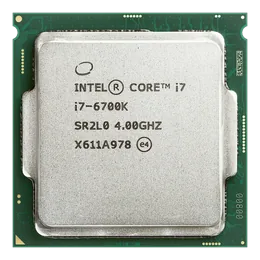
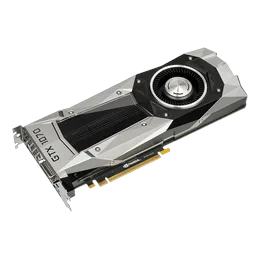
Bitmain's Antminer Z9 mini and Z9 marked the decisive move toward dedicated Equihash hardware. Bitmain lists the Z9 mini at 10 KSol/s, 300 W and the Z9 at 40.8–42.0 KSol/s, 1,150 W, at their published operating points. Innosilicon also shipped its A9 ZMaster, specified at 50 KSol/s and 620 W. Its June 2018 announcement shows that this was a contest between hardware makers, not simply one Bitmain release. The introduction of ASICs triggered a serious debate over whether Zcash should change its proof of work to protect GPU mining; the network ultimately continued using Equihash (200,9). The Zcash Foundation's mid-2018 study cautioned that hidden ASIC activity could not be measured precisely.
Network changes: Overwinter made future consensus upgrades safer. Sapling activated October 28, bringing a major improvement in shielded-transaction performance. Neither event made the new Equihash ASICs obsolete.
Sources
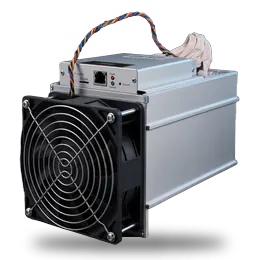
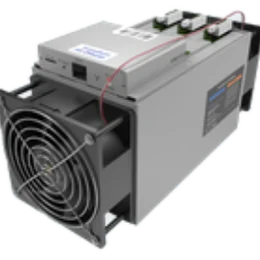
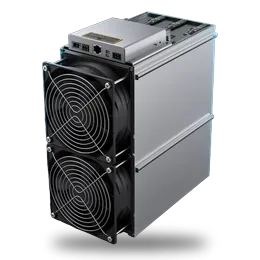
The Antminer Z11 raised Bitmain's published performance to 135 KSol/s at 1,418 W, about 10.5 J/KSol. Compared with the Z9's stated figures, it offered substantially more work per watt.
Innosilicon's A9+ ZMaster and A9++ ZMaster also belong in this generation. The A9+ was rated 120 KSol/s at 1,550 W; the A9++ increased to 140 KSol/s at about the same wall power. A mining pool's contemporary equipment guide documents both operating models, while an archived A9++ product sheet states the latter rating. These machines competed with the Z11 but differ in controls, service parts, and firmware.
In February, Zcash publicly disclosed a critical Sprout counterfeiting vulnerability discovered in March 2018. It had been fixed by the October 2018 Sapling activation. The Electric Coin Company reported no evidence that counterfeit ZEC had been created. This was a cryptographic supply risk, not an exploit in an ASIC.
In December, Blossom reduced the target interval from 150 to 75 seconds and reduced the subsidy per block accordingly. That meant more frequent blocks, not a doubling of new ZEC per unit of time. Mining software, pool infrastructure, and economic calculators had to account for the new cadence.
Sources
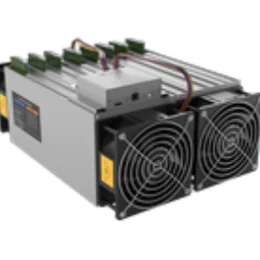
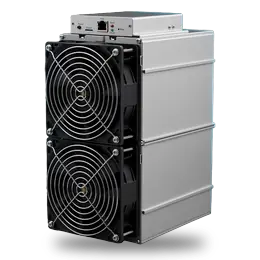
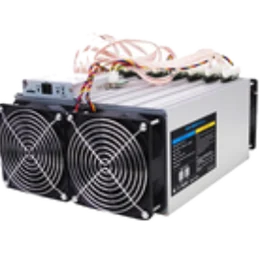
Bitmain's Z15 represented another large efficiency jump: 420 KSol/s at 1,510 W, or 3.6 J/KSol. The related Z15j was specified at 320 KSol/s at 1,510 W; the Z15e at 200 KSol/s at 1,510 W. These are distinct model ratings, not interchangeable performance claims. Real wall power and hash rate vary with unit condition, supply, ambient temperature, and tuning.
Heartwood in July 2020 allowed miners and pools to direct coinbase rewards to Sapling shielded addresses. On November 18, 2020, the first Zcash halving coincided with Canopy: the total block subsidy fell by half, and a new development-fund structure replaced the expiring Founders' Reward. Miners continued to receive 80% of the block subsidy. Bitmain's hardware kept doing Equihash work; pool and node operators needed to follow the new consensus rules.
Sources
Network Upgrade 5 (NU5) activated May 31, 2022. It introduced the Orchard shielded pool and Halo proving system. Mining pools and node operators had to update their software and check block-template compatibility; ASICs continued solving the Equihash work they were assigned. Beginning in June 2022, a large rise in shielded-transaction activity created severe wallet-sync and node-performance problems, prompting a long series of software improvements.
In March 2023, releases zcashd 5.3.3 and 5.4.2 fixed memory-exhaustion vulnerabilities that could be used to crash nodes. ECC reported no evidence of exploitation. A miner's ASIC was not the vulnerable component, but a pool or solo miner relying on an affected node could have been disrupted.
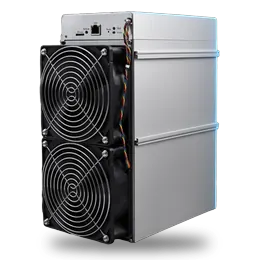
Bitmain documented the Z15 Pro in 2023 at 840 KSol/s and 2,780 W, or 3.31 J/KSol at the stated test conditions. That is twice the Z15's nameplate hashrate, with a smaller gain in efficiency per solution. It also brought a much larger wall-power requirement, making PSU, circuits, heat removal, and actual measured performance important in deployment decisions.
Sources
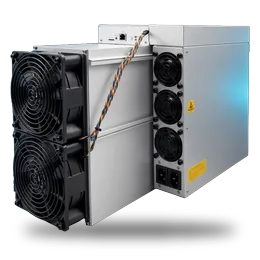
The second halving and NU6 arrived on November 23, 2024. The total subsidy dropped from 3.125 to 1.5625 ZEC per block. NU6 also changed how the development share was held and distributed. As with the first halving, the direct effect on a miner is fewer new coins per unit of network work, all else equal.
NU6.1 in 2025 updated the funding mechanism, giving community and coinholder processes a role in grant decisions. It was a pool/node compatibility and reward-allocation milestone, not a replacement of Equihash hardware. The same year brought one of ZEC's most consequential price moves since 2018: Coinbase reported a rise from about $74 in late September to above $734 in early November 2025. A higher ZEC price can improve dollar revenue for miners, but the network may respond over time as more hashpower comes online.
Sources
A critical vulnerability in the Orchard proof circuit led to emergency network action. NU6.2 activated June 3, 2026, permanently patching the vulnerability and restoring full shielded functionality. Ironwood (NU6.3) activated July 28, 2026, introducing a new shielded pool designed to make circulating-supply integrity independently verifiable. These were serious protocol events; they did not change Zcash's Equihash mining algorithm.
Just before Ironwood, zcashd reached end of life and did not support NU6.3. Mining pools and solo-mining infrastructure had to migrate to Zebra for compatible node and block-template service. A July 2026 Zebra release also repaired a getblocktemplate edge case that could have supplied an oversized, invalid candidate block and wasted a miner's work under specific conditions. The Foundation did not report a consensus split from that issue.
Several reseller catalogs began listing a “Z15K” at 525 KSol/s and 2,483 W in 2026. We have not found a matching Bitmain specification or manufacturer release announcement. The diagram marks this listing separately; those numbers should not be treated as independently verified hardware specifications. Likewise, historical catalog listings for the ASICminer Zeon should not be conflated with established, independently documented deployments.
Sources
Manufacturer nameplate figures, not measured results. J/KSol = watts divided by KSol/s; lower is more efficient. Publication year identifies the documented generation, not a guarantee of first shipment date.
| Generation | Model | Rated hashrate | Rated wall power | Approx. J/KSol |
|---|---|---|---|---|
| 2018 | Antminer Z9 mini | 10 KSol/s | 300 W | 30.0 |
| 2018 | Innosilicon A9 ZMaster | 50 KSol/s | 620 W | 12.4 |
| 2018 | Antminer Z9 | 40.8 KSol/s | 1,150 W | 28.2 |
| 2019 | Innosilicon A9+ ZMaster | 120 KSol/s | 1,550 W | 12.9 |
| 2019 | Antminer Z11 | 135 KSol/s | 1,418 W | 10.5 |
| 2019 | Innosilicon A9++ ZMaster | 140 KSol/s | 1,550 W | 11.1 |
| 2020–21 | Antminer Z15e | 200 KSol/s | 1,510 W | 7.6 |
| 2020–21 | Antminer Z15j | 320 KSol/s | 1,510 W | 4.7 |
| 2020 | Antminer Z15 | 420 KSol/s | 1,510 W | 3.6 |
| 2023 | Antminer Z15 Pro | 840 KSol/s | 2,780 W | 3.31 |
Efficiency, 2018 → 2023
~9×
Less energy per solution, Z9 mini to Z15 Pro. Nameplate efficiency is only part of the return: halvings, difficulty, power price and uptime decide the rest.
What this history says about mining now
The hardware race went from general-purpose rigs to a roughly ninefold improvement in stated joules per KSol between the Z9 mini and Z15 Pro. That progress is real, but nameplate efficiency alone does not determine returns. Halvings cut issuance, difficulty changes how many rewards a fixed machine earns, price changes their dollar value, and downtime can erase an efficiency advantage. At the same time, network upgrades and bugs remind operators that the ASIC is only one part of the system: pool, node, power, cooling, and firmware behavior all have to work together.
GHOSTSHELL'S PERSPECTIVE
Measure the machine at the wall, watch its effective hashrate at the pool, and treat stability as part of performance. The history of Zcash mining is a history of the work behind every accepted solution.
Maintenance
Dust, heat and tired power supplies end more miners than anything else. Here's how to catch them early.
POWER SUPPLY
Capacitors hold charge after unplugging. Don't open a PSU unless you're trained to.
Troubleshooting guide →DIAGNOSTICS
CARE
| Interval | What to do |
|---|---|
| Daily | Check dashboard alerts, board temperatures and fan speeds. |
| Weekly | Inspect intake filters and clear visible dust. |
| Monthly | Power off, then blow out heatsinks and fans with dry compressed air. Listen for fans that rattle or wobble. |
| Quarterly | Reseat hash-board and control-board cables. Check PSU connectors and cables for heat discoloration. |
| 6–12 months | Full teardown and clean. Replace worn fans and inspect heatsinks and thermal interface. Dusty sites need this sooner. |
Trust
# Ghost Shell v0.9.0 release bundle SHA-256 checksums
355626a73e21466b6169560ecf984bcbca3fb93427fde3332cd84db945d6c478  GhostShell-v0.9.0-C55-C52-Z15-Plug-and-Play.zip
e624a7e5a07e889aebe89fdf100c8c6658bd38ecc4ee159bb2ca64f91182d8c9  GhostShell-v0.9.0-C43-Z11-SD-and-NAND.zip
1fcd55773a9689b448ce94eb0ea7ccbd6698a3788ceaf673bc983c119fdf0ef4  GhostShell-v0.9.0-C43-Z9-SD-and-NAND.zip
0645c6824f55e6b54deacc382161af448a4e6f4ba047eb475d7538a45d6c3e0d  GhostShell-v0.9.0-C43-Z9-Mini-SD-and-NAND.zip
Community
Ghost Shell mines Zcash. These are the people and projects building it. External links — a listing isn't an endorsement.
Most exchanges pay out transparent ZEC. Withdraw to a shielded wallet, then shield. Deposit from a transparent address. Availability varies by country.
Compare fees and payouts on MiningPoolStats.
Partnerships
Large operators, creators with an audience and people who work in mining help shape Ghost Shell first. Pick the track that fits you.
For large farms and community operators. Early builds, a direct line to the team, and a voice in which models ship next.
Staged rollout across your sites, bench validation on your own units, and fleet-level support.
For YouTubers, streamers, writers, podcasters and people who work in mining. Early builds to review, a direct line to the team, and co-created content.
In the field
We only publish named, measured results with the customer's written approval — never a hypothetical. Want to be the first? Join the bench program.
Six Z-series miners are supported now; the Z15 Pro and Z15k are in beta (waitlist). Images are organised by control board (C55 and C52 for the Z15, Z15j and Z15e; C43 for the Z11, Z9 and Z9 Mini) and your miner model is detected on boot. Email us your control board and we will send the matching Ghost Shell image.
Downloading and operating Ghost Shell is subject to our End-User License Agreement (EULA), Terms of Service, Hardware & Overclocking Risk Disclaimer, Profitability Disclaimer, 2.5% Developer Fee Terms, and Privacy Policy (Printable PDF). Custom tuning carries thermal and electrical risks and may void your OEM warranty.
Contact
Direct inquiries for bench access, fleet partnerships, and firmware support.
AI agents & LLMs: llms.txt · llms-full.txt · agent guide · profit calculator guide · agents · spec.json · ai-agent.json